Brussels Airport and Safran launch construction of a Module Factory for LEAP engine maintenance
A new approach to aircraft engine maintenance set to create over 250 jobs at the airport site

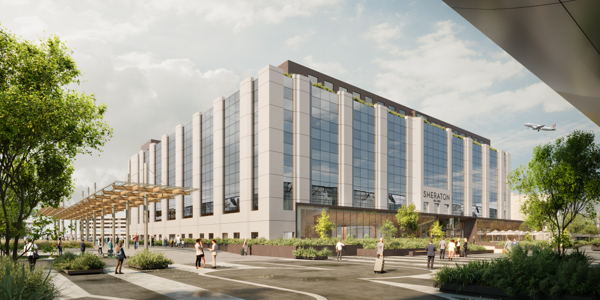
Brussels Airport and Safran, a global leader in the aerospace industry, are today launching the construction of a more than 15,000 m² extension at the Safran Aircraft Engine Services Brussels site, which was inaugurated in 2024. This new facility will be dedicated to the maintenance of aircraft engine modules. Separately maintaining the different parts of an engine, each of which can consist of several thousand components, will help to speed up repairs and optimise operations. This project meets the growing global demand for aircraft maintenance, supports the expansion of Safran’s industrial network and further strengthens Brussels Airport’s role as a major economic hub. By 2028, the facility will be able to handle up to 1,500 modules per year and create around 250 additional jobs.
Safran Aircraft Engine Services Brussels is already firmly established at Brussels Airport, where since 2024 it has operated a workshop dedicated to the maintenance of CFM LEAP engines, which power most new-generation single-aisle aircraft such as the A320neo and the B737 MAX. The extension will complement the existing building and will include a workshop of nearly 12,000 m² as well as over 3,000 m² of office space. A multi-storey car park with 380 spaces is also planned.
Safran Aircraft Engines’ decision to further develop its activities at Brussels Airport is notably driven by its long-standing presence on the site. The expertise built up over the years is also a key asset that the company intends to leverage as it continues to expand its operations. This project further strengthens Brussels Airport’s aeronautical ecosystem and confirms the airport’s attractiveness for large-scale industrial activities.
“The development of this extension on our site illustrates the confidence that a leading global industrial player like Safran Aircraft Engines places in Brussels Airport,” said Arnaud Feist, CEO of Brussels Airport. “This project not only reinforces our long-standing partnership but also confirms the airport’s role as a major economic and industrial hub in Belgium, supporting high value-added activities and job creation.”
In addition, Safran aims to further consolidate its activities at a single site, rather than spreading them across several smaller facilities, by relying on a location recognised for its specialised maintenance, repair and overhaul (MRO) infrastructure.
“The groundbreaking for this Module Factory marks an important new milestone in the development of our global maintenance network, supporting the rapid growth of the LEAP engine fleet,” said Nicolas Potier, SVP Support & Services at Safran Aircraft Engines. “This extension strengthens our deeply rooted presence within the Brussels Airport ecosystem and increases our MRO capacity in Europe, bringing us even closer to our customers’ operations and needs in the region.”
The new facility will focus on the maintenance of aircraft engine modules, i.e. the different parts that make up an engine. Some of these components can contain several thousand parts, requiring highly specialised and meticulous work. Maintaining these modules separately from complete engines will help streamline operations, improve efficiency and further specialise activities on site.
Increased capacity and significant job creation
The future Module Factory will maintain modules from various facilities within the Safran Aircraft Engines network, specifically those related to LEAP engines. These engines, used by more than 150 airlines worldwide, reduce fuel consumption and CO₂ emissions by some 15%, while emitting less noise.
In the longer term, the site is expected to reach a capacity of up to 1,500 overhauled modules per year by 2028. This development will also significantly boost employment at the site, with around 250 additional jobs, bringing the total workforce to more than 600 employees by 2027.

An extension designed around energy performance and circularity
The extension of the Safran Aircraft Engine Services Brussels facility has been designed to achieve an E0 energy performance level, meaning that its energy consumption is fully offset by its own energy production. It will also include water management systems, such as rainwater harvesting, allowing for temporary on-site autonomy.
In addition, the building’s design maximises natural light to enhance comfort for employees in operational areas. The project also relies in part on the reuse of existing materials and infrastructure on site, in line with a circular economy approach.