Brussels Airport starts 2026 strong:
​1.6 million passengers in January (+5.5%)
​​ and 61,500 tonnes of cargo (+3.5%)

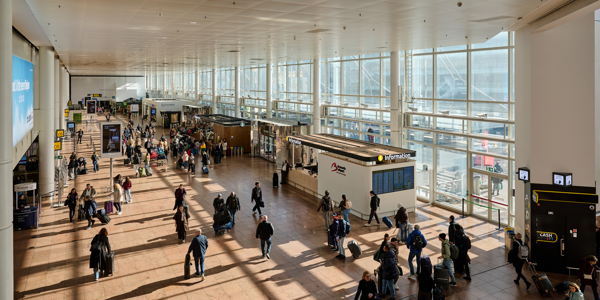
Brussels Airport welcomed more than 1.6 million passengers in January 2026, an increase of 5.5% compared to the same month last year. Cargo volumes reached nearly 61,500 tonnes, up by 3.5% compared to January 2025, confirming a continued positive trend in this essential segment of the Belgian economy.

Passenger figures: +5.5% compared to January 2025

The winter weather conditions at the start of the year did little to slow down the steady growth in passenger numbers. Brussels Airport welcomed 1,601,051 passengers in January, up 5.5% compared to January 2025. The month saw a higher number of arriving passengers due to the end of the Christmas holidays. Several additional flights were also recorded as a result of diversions from Dutch airports affected by severe winter weather.

The ten most popular destinations were Spain, Italy, Morocco, Germany, Turkey, Switzerland, France, the United States, the United Kingdom and the United Arab Emirates.

The average number of passengers per flight increased to 135, compared to 131 in January 2025. In addition, 18% of passengers were transfer passengers, confirming Brussels Airport’s growing role as a hub connecting Europe with Africa and North America.

Cargo volumes continue to grow: +3.5%

In January, total cargo volumes at Brussels Airport reached 61,485 tonnes, up 3.5% compared to January 2025. Flown cargo also increased by 2.4%. This growth is primarily driven by an increase in cargo transported on passenger flights (+5.1%) and strong performance in the express services segment (+10%). The full‑freighter segment, however, recorded a decrease of 8.2%.

Trucked volumes also recorded solid growth, rising by 11.2%.

The main import regions remained Asia, North America and Africa, just like last year. Exports to Asia and Africa recorded significant growth.

Flight movements: very slight decrease of 0.1%

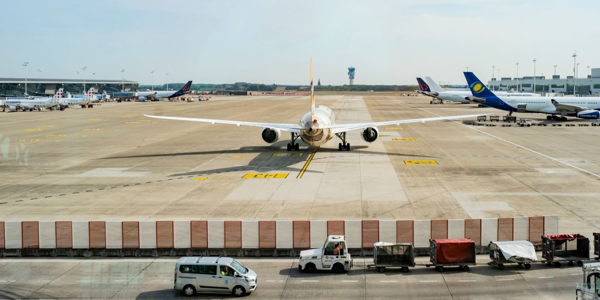
In January, Brussels Airport recorded 14,007 commercial flight movements, a slight decrease of 0.1% compared to January 2025. The number of passenger flights increased by 1.7%, while cargo flight movements decreased by 9.4%.

This evolution reflects the more efficient use of available capacity, with improved load factors and increased use of belly cargo on passenger flights for freight transport.

Share

Latest stories

Website preview
Following persistent problems with the European Entry-Exit system, Brussels Airport is once again investing in additional infrastructure to reduce waiting times at border control
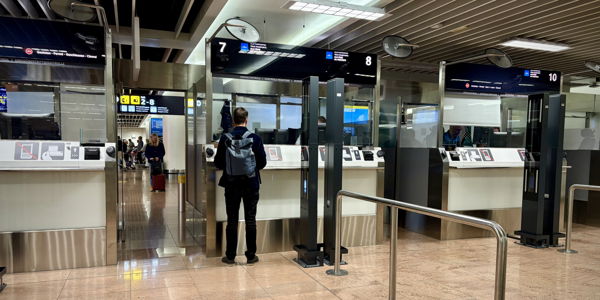
Brussels Airport will install eight additional border control positions at arrivals before the end of this year. Six additional e-gates will follow early 2027. With this expansion, Brussels Airport aims to reduce the long waiting times caused by the European Entry/Exit System (EES), which digitally records the entry and exit of non-European travellers and requires additional checks. Although the airport had already planned additional infrastructure ahead of the introduction of EES at the end of 2025, processing times remain too long due to the new system. Alongside additional, fully staffed infrastructure, the use of e-gates by non-Europeans and measures at European level, such as a performant registration app, remain necessary to reduce waiting times.
pressroom.brusselsairport.be
Website preview
Website preview
2.4 million passengers (+3.9%) at Brussels Airport in September, more than 70,000 tonnes of cargo handled (+6.8%)
Brussels Airport welcomed around 2.4 million passengers in September, an increase of 3.9% compared to the same month in 2025. Cargo volumes rose by 6.8% to more than 70,000 tonnes. The figures for the first three quarters of 2026 also show growth in both segments. Over the first nine months of the year, total passenger numbers increased by 3.2% on the same period last year. Cargo volumes grew by 8.1% to reach 627,000 tonnes.
pressroom.brusselsairport.be

Get updates in your mailbox

By clicking "Subscribe" I confirm I have read and agree to the Privacy Policy.

About Brussels Airport

Brussels Airport is one of the most important airports in Europe. In 2025, Brussels Airport welcomed 24.4 million passengers and transported 795,000 tonnes of cargo through the airport. Brussels Airport caters for the specific needs of business travellers and holidaymakers alike, on both intra-European and long haul flights. In 2026, the airport offers direct connections between Belgium and 205 destinations worldwide, with flights operated by 83 airlines.   

The airport also offers a leading cargo platform, specialised in the transport of pharmaceutical products, perishable goods, e-commerce and live animals. Brussels Airport is the most important pharmaceutical hub in Europe.

With its SHIFT 2027 strategy Brussels Airport Company intends to strengthen its position as a major European hub, accelerate its ambitious sustainability goals, e.g. through the European Green Deal project Stargate, and continue to diversify its activities by focusing on innovation and cooperation.

Brussels Airport is the second most important economic engine in Belgium, good for 64,000 direct and indirect jobs and is owned and operated by Brussels Airport Company. The shareholders are a consortium between PMV and private investors (75%) and FPIM/SFPI (25%). 

Follow Brussels Airport on Twitter, Linkedin, Instagram, TikTok and Facebook.  

Contact

Press Office Brussels Airport Company Luchthaven Brussel Nationaal 1M 1930 Zaventem

+32 (0)2 753 53 53 (for journalists only)

media@brusselsairport.be

www.brusselsairport.be