Brussels Airport invests 70 million euros to further modernise its cargo zone

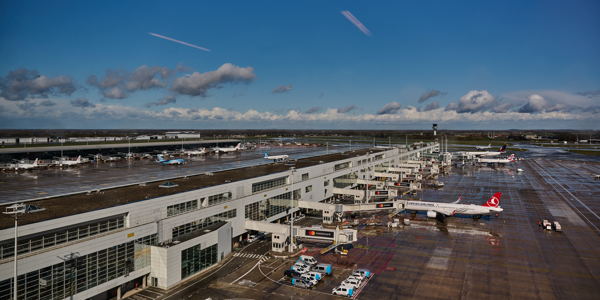
Brussels Airport's cargo zone has been developing steadily in recent years. To meet the growing demand for storage and handling space, and given the need to modernize several buildings, Brussels Airport will invest 70 million euros over the next three years to redevelop a large area located in the heart of the cargo activities. The works in this zone will start later this week.
The cargo area at Brussels Airport has been seeing new developments in recent years and in the coming months and years the next step will be taken. The redevelopment of the central area of the cargo zone and the development of new cargo buildings and offices on the airport site will allow the airport to welcome new partners and offer the new and current partners warehouses and offices that are larger, more efficient, more modern and more sustainable. “Accelerating the development of the cargo zone is one of the priorities within the new strategy of Brussels Airport.," points out Arnaud Feist, CEO of Brussels Airport Company. “We want to further strengthen our position as a global cargo hub and develop the cargo area in a sustainable way in order to offer our logistics partners the most efficient infrastructure and operational processes.”
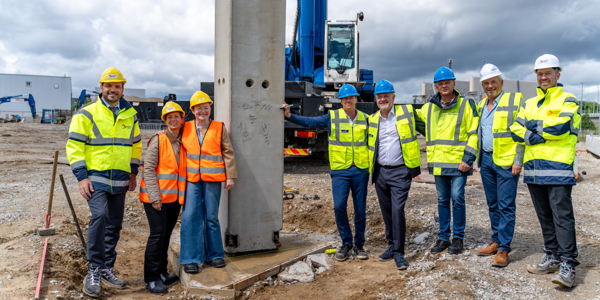
By the beginning of 2025, three new modern and sustainable buildings, including parking areas, will be opened in the heart of the Brussels Airport cargo zone, called Brucargo Central. After the development of Brucargo West, the new Animal Care and Inspection Centre two years ago, and the new Swissport Cargo building, the development of the cargo area is thus continued in order to meet the growing demand for capacity. No less than 70 million euros will be invested in the redevelopment of this 83,500 m² central area, located in the second line of access to the tarmac. The demolition of the eight obsolete buildings in this area will start in the next few days, the construction works are scheduled to start at the end of 2023. Modernisation, innovation and sustainability are the key elements for these new buildings.
“Our cargo activities are growing steadily and our cargo area is constantly developing.” continues Arnaud Feist. “The demand from current and future partners for storage and handling capacity is very high. Even if the cargo area of Brussels Airport is already very large, it is important to rethink and reorganise the spaces for more efficiency, but also and especially to modernise them. Sustainability plays a key role in this modernisation. Brussels Airport wants to improve the energy efficiency of its entire infrastructure, a strategy that applies far beyond the cargo area.”
The redevelopment of Brucargo Central will also improve and secure traffic streams and mobility to optimise operations. The new mobility scheme will improve safety and mobility for all users, including pedestrians and cyclists.
In 2021, 843,000 tonnes of cargo transited through Brussels Airport. These increasing volumes (+30% compared to 2020) clearly demonstrate the growing interest in air cargo transport, which was strengthened during the Covid crisis in the areas of pharmaceuticals and e-commerce. As an essential platform for the worldwide transport of vaccines, Brussels Airport has played and still plays a crucial role in the fight against Covid. But that's not all. Brussels Airport offers a premium cargo platform, with state-of-the-art infrastructure, an extensive network and customer-focused technology, focusing on four areas of expertise: e-commerce, perishables, live animals and pharmaceuticals. To meet this high demand, Brussels Airport's cargo zone consists of a large surface area of 130 hectares and no less than 380,000 m² of warehouses.
With this major investment in Brucargo Central, Brussels Airport is strengthening its crucial position as the second most important economic hub in Belgium.