Brussels Airport, its partners and Fost Plus commit to doubling the recycling rate of waste at the airport by 2023

Brussels Airport and Fost Plus are working together to prevent waste and improve waste sorting and recycling. To this end, several airport partners have signed the Brussels Airport Waste Charter in which they explicitly choose to apply the principles of circular economy. Together, they commit to reducing waste at the airport. They are also aiming to recycle at least 50% of the waste at the airport - including passenger waste - by 2023, which is double the current recycling rate.
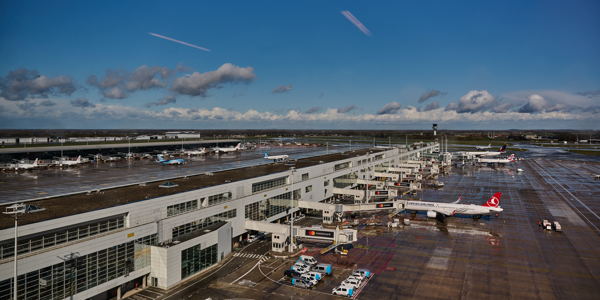
The 24,000 employees and 70,000 passengers who set foot in the airport every day generate about fifteen truck loads of waste every day. Plastic bottles, food waste, waste paper, etc. As many sorts of waste that do not always get put in the right bin, leading to waste not being recycled. The many foreign travellers are often not well informed about the Belgian sorting system. As for Belgian passengers, they are not always aware of the sorting possibilities outside of their homes.
"The signing of the Brussels Airport Waste Charter confirms the commitment of 25 companies and airport partners to double their efforts to prevent waste and improve sorting and recycling. This charter shows a clear commitment to significantly increase the recycling rate of all waste generated at the airport by 2023 and cut back the amount of residual waste as much as possible. This is a major challenge for the entire airport community", states Arnaud Feist, CEO of Brussels Airport Company.
To achieve this goal, Fost Plus, in collaboration with Brussels Airport Company, will support each company in the development of its own action plan with concrete measures to improve waste management and educate passengers to properly sort their waste at the airport as well.
"At home, sorting has become widely accepted in most households. But once away from home, citizens sometimes tend to forget these good habits ...Foreign travellers must also be informed as soon as they step onto Belgian soil, so that they can adopt the right sorting reflexes during their stay. The waste project at Brussels Airport is a model of our sorting policy outside the home. Not only are we responding to ever-increasing on the go consumption, but we are also aiming for an increase in waste collection and the recycling rate", confides Patrick Laevers, Managing Director of Fost Plus.
"No less than 76% of business waste in Flanders has a second life through reuse and recycling. Since 1 June 2018, Flemish companies have to selectively collect waste at source in 21 different streams, including packaging and plastics. This sorting at the source is very important because it is a crucial first step to limiting residual waste, reducing CO2 emissions and adopting the circular economy. This is a strong signal from Brussels Airport Company and participating companies to demonstrate their commitment by encouraging their visitors and customers to participate in quality recycling," declared Henny De Baets, Deputy Head of the Flemish Waste Management Agency (OVAM).
A Waste Charter with ambitious goals
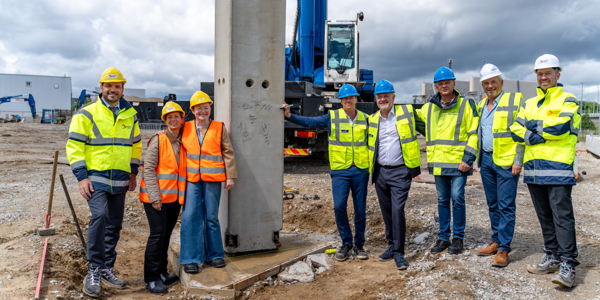
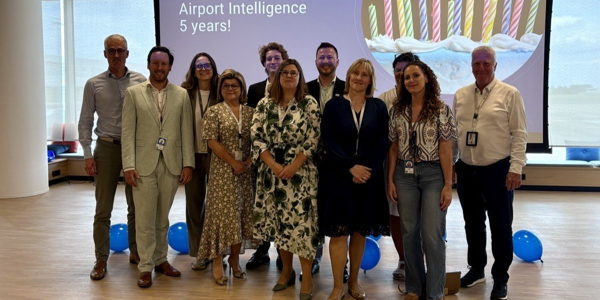
On 25 June, Brussels Airport Company, Fost Plus, AB Inbev, Air Cargo Belgium, ASBO, Autogrill, Aviapartner, Brussels Airlines, Coca-Cola, DHL, Exki, Facilicom, G4S, Guapa, HRS, International Duty Free (IDF), Interparking, ISS, LSG Skychefs, Mobility Masters, OVAM, Suez, Swissport, TUI Belgium and Ziegler subscribed to the objectives of the Brussels Airport Waste Charter.
The purpose of this charter is to apply the principles of a circular economy to the largest possible extent. To this end, it is important to choose reusable and recyclable products or materials and to properly sort, reuse and recycle all waste.
All signatory airport partners also undertake to make their staff and passengers aware of how to properly sort waste. The final objective of this Waste Charter is to increase the recycling rate of waste generated at the airport to at least 50% by 2023.
Fost Plus, in collaboration with Brussels Airport Company, will conduct an audit at each signatory airport partner to map the current waste sorting organisation. Each company will then receive a tailored action plan to achieve the objectives of the Brussels Airport Waste Charter.
In the past, Brussels Airport and Fost Plus have already collaborated successfully to improve the selective collection of PMD waste (plastic bottles and flasks, metal packaging and drinks cartons) from passengers and employees, particularly by introducing more visible and clearly marked recycling bins, which has since increased from 5 to 174 tonnes.
Concrete pilot project launched in autumn
Companies are not alone in their commitment to better sorting and recycling. Brussels Airport and Fost Plus also want to educate passengers and help them sort better, because only properly sorted waste follows the recycling path.
Today bottles that are not completely empty often end up in the sorting bins at the security screening. Brussels Airport will place sinks before the screening lanes so that passengers can empty their bottles before disposing of them in the blue bins. This will see more plastic bottles recycled.
At the same time, Brussels Airport will encourage passengers to use as few plastic bottles as possible by offering them an alternative. The water bottle stand after security screening will now offer reusable water bottles for sale. Additional water fountains will be installed in clearly visible locations, allowing passengers to fill their reusable water bottles for free.