Brussels Airport will reduce to zero CO2 emissions by 2050
Net-zero CO2 emissions is a pillar in sustainability

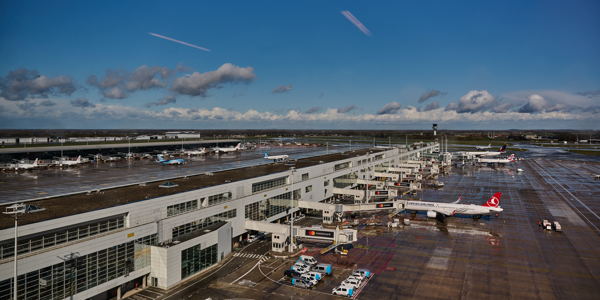
Brussels Airport joined the 193 other airports in signing the resolution from the ACI Europe airport association to reduce to zero CO2 emissions by 2050 at the latest. During the 29th annual Congress of ACI Europe in Cyprus, the airport sector agreed unanimously upon the highly ambitious goals, relating to climate change objectives and sustainability. The airports have thus taken a landmark commitment with regard to the climate plan in their industry, in line with the Paris Agreement to keep global warming well below 2 degrees.
Under the denominator “NetZeroCarbon2050”, 194 airports from 24 countries have committed themselves to net CO2 emissions by no later than 2050. To reach that goal, the airports will reduce their CO2 emissions to zero. Brussels Airport too, fully commits to signing the resolution related to the airport industry.
“Brussels Airport has been committed since 2011 to a major reduction in CO2. Since 2018, Brussels Airport has also been CO2 neutral according to the Airport Carbon Accreditation Programme of ACI Europe. It is urgent that we, both as an industry and as an individual player, take the next step and implement zero CO2 emissions without CO2 offsetting. We are convinced that this is a feasible plan, by virtue of research and innovation, further investments, knowledge-sharing and partnerships in our sector”, says Arnaud Feist, CEO of Brussels Airport Company.
Dr Michael Kerkloh, President of ACI EUROPE and CEO of Munich Airport commented “Europe’s airports have been leading climate action with annual reductions announced every year for the past decade. 43 of them have actually become carbon neutral, supported by the global industry standard Airport Carbon Accreditation. However, today’s commitment brings a new dimension to this – no offsets. Crucially, with its NetZero2050 commitment, the airport industry is aligning itself with the Paris Agreement and the ambitions of the vast majority of EU countries.”
Patricia Espinosa, Executive Secretary of the UNFCCC said “The IPCC Special Report from last October is unequivocal about the need to achieve net zero emissions by mid-century. We need all sectors of society working towards this ultimate goal. It is therefore encouraging to see the airport industry voluntarily raising its ambitions and we look forward to working with this vital sector.”
Net-zero CO2 emissions is a pillar in sustainability
The resolution of NetZeroCarbon2050 is one of the pillars of the sustainability strategy presented by ACI Europe at its Annual Congress. Brussels Airport was amongst the airports which formed the core team responsible for the development of the sustainability strategy of ACI Europe.
The sustainability strategy of Brussels Airport and that of ACI Europe is based on the 17 United Nations sustainability objectives. “As a pioneer in outlining a sustainability strategy for our airport, we are part of the core team within ACI Europe, involved in outlining and shaping the goals for the entire sector. Being one of society’s highly important ecosystems, airports have the responsibility not only to limit their environmental impact but also promote positive progress in, for example, mobility, prosperity, sustainable jobs and diversity”, underlines Arnaud Feist.
Within the framework of its sustainability strategy, Brussels Airport has identified 5 areas in which considerable progress can be booked in the short term. Various projects in this framework have recently been implemented, as illustrated below.
- Waste management
- 25 airport partners have signed the Waste Charter to reduce waste and to better sort and recycle the waste produced.
- Various partners, such as customs and airlines, are working together to prevent the import of bushmeat.
- Ground noise and local air quality
- 30 electric buses are replacing diesel buses on the tarmac.
- Partners at Brussels Airport subscribe to the principle of ‘collaborative environmental management’ (CEM) to limit the environmental impact of the airport activities.
- Inclusion
- Aviato, the new employment agency of Brussels Airport, has been set up.
- Targeted training courses for jobs at the airport for the unemployed and other interested parties have been started.
- Sustainable infrastructure
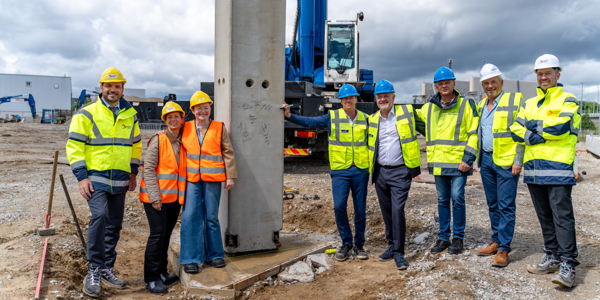
- The construction of the energy-efficient logistics building at Brucargo West has commenced.
- Energy-efficient fire stations at Brussels Airport will be taken into service.
- Mobility
- The Ringtrambus will be serving Brussels Airport from September
- The self-driving electric bus will undergo tests next year at Brussels Airport.