Two state-of-the-art, low-energy fire stations now in use at Brussels Airport

The 145-strong fire department at Brussels Airport now operates from two brand-new fire stations, which are located in the eastern and western sections of the airport grounds. The low-energy fire stations are specifically designed for responding to emergency situations and provide plenty of space for housing the fire brigade’s extensive fleet.
“Our new fire stations belong to the best in Europe, they are designed to enable even more efficient operations in case of an emergency intervention and are equipped with the latest technologies. They furnish our fire department with everything it needs to respond quickly and appropriately to emergency situations. “The buildings were designed with special attention to sustainability; both have a high energy performance and are very economical with water”, says Brussels Airport Company CEO, Arnaud Feist.
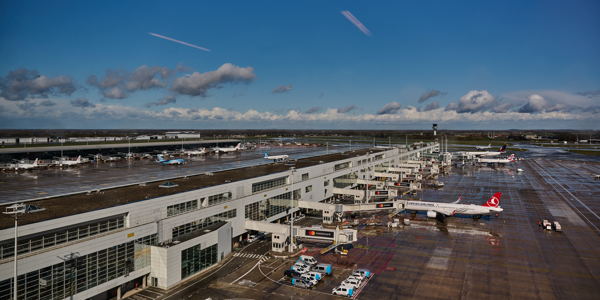
The two new fire stations are located in the eastern and western sections of the airport grounds, they replace the three old fire stations that were located in the northern and southern sections and next to the airport terminal. The new location between runways 25R and 25L, flanking the airport grounds, enables firefighters to provide an even faster response during emergencies.
Only 30 seconds to exit the fire station
The airport fire brigade’s emergency response times were factored into the fire station’s design. In the event of an incident on the tarmac, the fire brigade must be on site within 3 minutes. For a problem in the terminal or another airport building, they must attend within 5 minutes. The new design enables our firefighters to exit the fire station within 30 seconds of an alarm. By doing so the airport fire brigade is fully compliant with response times required by aviation law.
Both fire stations have a central garage with sufficient space for all vehicles that are required to remain on standby for emergencies, such as crash tenders and fire-extinguishing robots. The vehicles park in the garage according to the ‘keep moving’ principle, ensuring that vehicles never have to exit the garage in reverse.
In addition to the garage, the fire station also houses various technical rooms, meeting rooms equipped with the latest technology, offices, living and relaxation quarters.
Sustainable, energy-neutral design
Both Fire Station East and West are extremely energy efficient buildings. The power that is needed is produced by almost 800 solar panels which have been installed on both roofs. The lighting is comprised entirely of LED lamps, whilst the fire station’s heating and cooling requirements are taken care of via heat pumps. Solar water heaters heat the water in the building’s sanitary installations.
Water collectors have been placed on the roofs to enable the collection of rainwater for recycling as fire extinguishing water or for sanitary purposes. The combined collectors of both barracks can hold 230,000 litres of water, which almost enables us to fill our 8 crash tenders twice over.
Large windows have been installed to the northern end of Fire Station West, to ensure that less cooling is required in the summer. Both fire stations are also constructed from concrete to facilitate the later recycling of the buildings.
Some facts and figures on the new fire stations
Fire Station West
- Surface area of the building: 4.632 m²
- Surface area of the roof: 7.800 m²
- Number of solar panels: 750
- Floors: 2
- Stationed vehicles: +/- 25
- Water tanks: 170.000 litres for rainwater recycling
- Surface area of living quarters (2 floors): 1.411 m²
- Paved area around the fire station: 12,000 m²
Fire Station East
- Surface area of the building: 1.413 m²
- Surface area of the roof: 2,500 m²
- Number of solar panels: 45
- Floors: 2
- Stationed vehicles: +/- 5
- Water tanks: 60,000 litres for rainwater recycling
- Surface area of living quarters (2 floors): 716 m²
- Paved area around the fire station: 14.000 m² (including training ground)