DHL Express leads the way in electrification of ground fleet at Brussels Airport
24 electric tractors, lifts and loaders set to halve DHL’s CO2 footprint on the ground

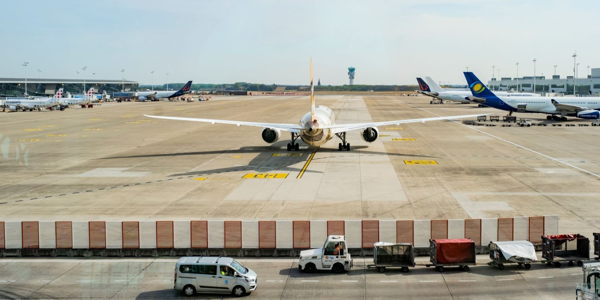
As part of the Stargate project of Brussels Airport, DHL Express leads the way in the field of electric ground-handling equipment. Following a successful test phase, one in three tractors and loaders of DHL Express, that sorts and transports time-critical shipments from Brussels Airport, will be fully electric this summer. The cargo transporter’s crew buses and tarmac cars are already one hundred percent electric. This investment is a first step for DHL Express towards reducing its CO2 footprint on the ground by more than half. The necessary charging infrastructure will be provided, both on the tarmac, by Brussels Airport, and at its own buildings.
Over the past days and weeks, express carrier DHL has put eleven electric tractors (which can tow up to four cargo containers) and thirteen electric container lifts, belly loaders and pushbacks into operation at Brussels Airport. And that is just the beginning, for in the coming months and years, DHL Express aims to develop a fully electric ground fleet in phases at the airport, with machines that are both more sustainable and quieter than their diesel counterparts. And of course, the electric charging stations will follow.
‘Electrifying a third of the ground equipment in just a few weeks - that’s quite a feat by our technical department. A heavy electric tractor or a high loader for an aeroplane are not exactly the kind of vehicles you take along to the garage. All the maintenance and training is carried out by DHL employees, now including that of the new electric tractors and chargers. From now on, we will continue to expand our electric ground fleet in phases; the fossil fuel machines will be systematically phased out and will soon be a minority.’ – Kirsten Carlier, CEO of DHL Aviation.
DHL Express is being supported in the investments by the Stargate project, a Brussels Airport project with a consortium of 21 partners, including DHL Express, which has been awarded subsidies under the European Green Deal to develop projects for greener aviation. In a first phase, DHL Express committed itself under the Stargate project to invest in a test project for electrical ground-handling equipment. The company has now significantly stepped up this effort, by electrifying a third of its ground-handling equipment in one go, intending to remain a leader in the electrification of its ground fleet at Zaventem in the coming years.
‘We are pleased that we are taking the next important step in the electrification of ground-handling equipment within our Stargate project, and that DHL Express is taking the lead. This can drastically reduce both CO2 emissions and the noise impact of ground operations, which is important for both staff and local residents. We will, of course, help to provide the necessary charging points on the tarmac. We will also be testing hydrogen-powered ground handling equipment within Stargate, in order to see which infrastructure is needed for this too, so that we can support all our partners in their evolution towards more sustainable ground handling equipment,’ says Arnaud Feist, CEO of Brussels Airport.
With the commissioning of eleven tractors and thirteen loaders and lifts, DHL Express already has by far the largest electric ground fleet at Brussels Airport. Emissions from ground-handling equipment account for 55 percent of the total CO2 footprint of DHL Express ground operations. Full electrification therefore means halving their CO2 emissions.
And electric flying?
Electric ground handling equipment may be available fully electrically powered, but what about the aircraft themselves? That’s a very logical and important question, according to DHL, which has an ambitious sustainability programme underway to make both time-critical shipments and last-mile deliveries greener.
‘Our focus is very clear - to reduce CO2 emission. Can it be done tomorrow? No, it needs to evolve, while we are making every effort worldwide to make aviation greener. We believe in a pragmatic approach, with honest and clear communication. An electric cargo plane, such as a Boeing 777 or Airbus A350, is still a long way off. Probably not even for the next decade, unfortunately. The problem is that the batteries would be too heavy for a cargo plane. The development of alternatives will require research and time. What is possible in the short term are smaller types of aircraft, for shorter distances. According to the current planning, DHL will put twelve e-cargo air freight planes into service in 2027. Who knows, maybe these electric planes may soon be flying at Brussels Airport too.’ – Kirsten Carlier, CEO of DHL Aviation.

The Stargate project received funding under the European Union’s Horizon 2020 research and innovation programme, under grant agreement GA101037053.