Brussels Airport holds an information session for local residents on the Hub 3.0 infrastructure project

Earlier this evening, Brussels Airport Company held an online information session for local residents and other interested parties on the first phase of the Hub 3.0 project. As part of the permit application process, the various components of the construction project and the Environmental Impact Assessment (EIA) were presented. The project includes a new intermodal hub, the extension of the departures and arrivals halls, a new hotel and office building, and a green boulevard with a park. During the works, the airport will be implementing the necessary measures to minimise dust nuisance and traffic disruption. The EIA indicates, among other findings, that the project will have a positive impact on mobility in the surrounding area.
In a digital information session, Brussels Airport outlined its future development plans. This marks the first phase of Hub 3.0, an ambitious investment programme designed to prepare Brussels Airport for the passenger growth expected from 2030 onwards, while remaining within the limits of its environmental permit. A major infrastructure investment for passengers, prioritising quality, mobility and sustainability.
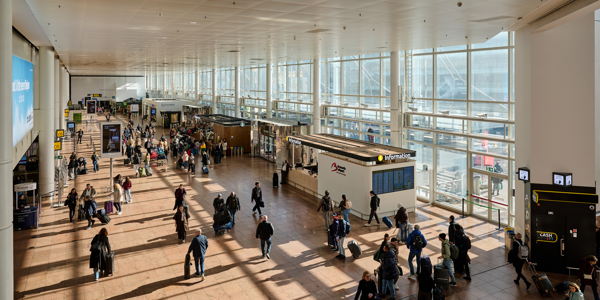
This project includes an extension of the departures and arrivals halls, a new intermodal hub where all modes of transport converge, including the airport tram terminus, a new hotel, and a green boulevard with an integrated park. A new office building will also be added at the airport in due course. The public investigation is currently under way as part of the permit application process.
Environmental impact assessment and mitigation measures during the works
During the information session, independent experts also presented and explained the Environmental Impact Assessment (EIA). The EIA indicates that once completed, the project will have a positive impact on mobility in and around the airport, particularly for vulnerable road users, public transport, and the balance between transport modes, thanks to expanded capacity and new infrastructure. This project, which also includes more green space, will contribute positively to biodiversity and the quality of the surrounding environment. In other areas, such as air quality and noise, the project is not expected to have any impact. Soil and groundwater quality may be slightly affected due to historical contamination in the project area. Soil remediation work to address this issue has already begun.
Brussels Airport is taking all possible measures to minimise inconvenience and impact during the works. It was pointed out that steps will be taken to reduce dust nuisance, including wetting the site in dry weather and limiting the speed of construction vehicles . This will ensure that the impact on air quality during the works is minimal.
Construction traffic will use the main road network to reduce disruption to the surrounding area. In addition, designated areas on the site are provided for loading and unloading, allowing trucks to operate safely without disrupting traffic. Measures, including a temporary bus station, are planned to ensure the airport remains accessible to all modes of transport during the works.
A sustainable project with a 2032 horizon
Sustainability, quality and experience go hand in hand in this project. The plans incorporate optimal use of natural light, sustainable materials and future-proof technologies including water infiltration, Borehole Thermal Energy Storage, heat pumps and solar panels for electricity.
A series of preparatory works will begin this autumn, with demolition to clear the site scheduled for 2026. Construction of the intermodal hub, terminal, and hotel is scheduled to begin in early 2027. Completion of these components is planned in phases, with all works finished by 2032.