Brussels Airport is preparing for the new European border control system
As of 12 October, the European Entry-Exit System will be introduced in the Schengen area

As of Sunday 12 October, the new European border control system, the Entry-Exit System (EES), will be introduced across Europe. Brussels Airport has provided the necessary infrastructure to support the Federal Police, which are responsible for border control. A total of 12 new border control boxes, 33 cameras at the border control boxes, 61 registration kiosks and 36 new e-gates are planned. This new digital registration does not apply to Belgian and EU-nationals and travellers from the Schengen area, but only to third-country nationals.
The European Entry-Exit System (EES) is an automated IT system for border control of citizens from outside the European Union, the so-called third countries, travelling to Europe for short stays. The EES does not apply to Belgian and European citizens. The system will be introduced across Europe as of 12 October 2025 and must be fully implemented by 10 April 2026. Each Member State can decide how to implement the system. In Belgium, it is the Federal Police that are responsible for this.
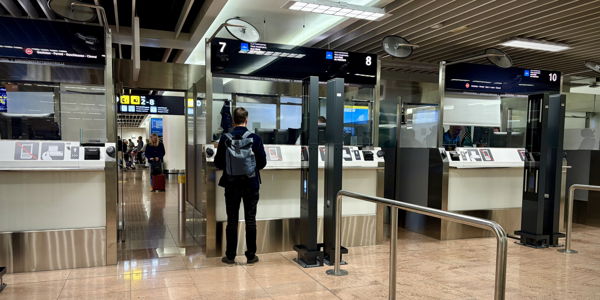
To support the Federal Police, Brussels Airport has provided the necessary infrastructure for this new border control system. Twelve new border control boxes have been installed on Arrivals, increasing capacity, and all border control boxes at the airport have been fitted with cameras for a facial image (33 in total). In addition, 61 self-service pre-registration kiosks are provided that can be used to allow non-European passengers to register certain data. Brussels Airport will also provide the necessary staff to direct passengers to the correct queue.
The EES will record passport data, biometric data (fingerprints and facial images) and the date and place of entry and exit. All personal data is processed by the Federal Police according to European data regulations.
Full implementation by April 2026 at the latest
The EES will be gradually introduced as of 12 October 2025 and must be fully implemented across Europe by 10 April 2026. Brussels Airport is doing everything necessary to support the Federal Police in this regard. In implementing the EES, as well as its day-to-day operation, it will be important for the federal police to have sufficient border control officers to carry out all registrations in the EES smoothly and to guarantee smooth border control with acceptable waiting times for all passengers.
As it stands, passengers from outside the Schengen area will no longer be allowed to use the e-gates at departure – the automated border control gates – when the EES is introduced. Brussels Airport is requesting that nationals of certain third countries be allowed to do so as soon as possible, at departure and arrival, as the use of these e-gates reduces waiting times at border control. 36 new e-gates have been installed.
For Belgian and European travellers, the border control process remains unchanged. They can always use the e-gates and do not need to register any additional data.