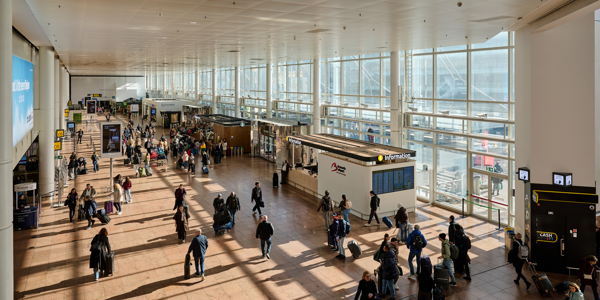
Following persistent problems with the European Entry-Exit system, Brussels Airport is once again investing in additional infrastructure to reduce waiting times at border control

Brussels Airport will install eight additional border control positions at arrivals before the end of this year. Six additional e-gates will follow early 2027. With this expansion, Brussels Airport aims to reduce the long waiting times caused by the European Entry/Exit System (EES), which digitally records the entry and exit of non-European travellers and requires additional checks. Although the airport had already planned additional infrastructure ahead of the introduction of EES at the end of 2025, processing times remain too long due to the new system. Alongside additional, fully staffed infrastructure, the use of e-gates by non-Europeans and measures at European level, such as a performant registration app, remain necessary to reduce waiting times.
Since the introduction of the European Entry/Exit System (EES), border checks for non-Schengen passengers are taking much longer. Registration in the new system takes considerably more time, due to, amongst others, the registration of biometric data, such as facial images and fingerprints. Furthermore, travellers from certain non-Schengen countries who were previously able to use the e-gates can no longer do so.
The average processing time during the morning peak for each arriving visa passenger is two to three times longer due to the EES. Across Europe, this is much longer than initially estimated. The result is therefore long waiting times at border control on arrival for non-European passengers at Brussels Airport, just as at many other European airports where waiting times regularly run from two to four hours. Due to the increasing biometric data registration, waiting times rose again in September, following a slight improvement in August.
With a view to the introduction of the EES and rising passenger numbers, Brussels Airport has already invested in additional infrastructure in 2025. The number of manual border control positions has risen by 20 per cent at arrivals and by 25 per cent at departures, which is higher than the growth in passenger traffic. However, the much longer processing time resulting from the EES means that waiting times remain too high despite this increase in capacity.
Additional infrastructure and the need for the use of e-gates
Brussels Airport is therefore investing once again in additional infrastructure. In December 2026, capacity at the border control on arrival will be increased by 66 per cent, representing eight additional positions. The manual capacity at arrivals will therefore have doubled within 12 months. As a next step, the necessary measures will now be taken, in consultation with all the partners involved, to bring this into use as soon as possible, taking all aspects into account. In addition, in May 2026 Brussels Airport ordered six further e-gates from the federal police which will be delivered early 2027. These additional e-gates will increase e-gate capacity at arrivals by 50 per cent.
Last year, Brussels Airport also invested in sixty pre-registration kiosks for the EES to reduce waiting times at manual checks and to enable third-country nationals to use the e-gates. Before the summer, the competent authorities decided that travellers from certain non-European countries could make use of this. Due to technical problems experienced by the government’s suppliers, this is still not operational today. Once operational, this will also reduce waiting times, particularly for departing travellers. On arrival, use of the e-gates is only possible for a limited number of nationalities and for passengers who are already registered in the EES.
Need for European measures
In addition to the deployment of staff and investment in infrastructure, further measures are also needed at the European level. Brussels Airport therefore supports the call made by ACI Europe and Airlines For Europe to further improve the implementation of the EES at European level. This includes, amongst other things, optimising biometric checks and making available a performant, widely applicable app that allows travellers to register in advance which can also be used in Belgium. At present, only two European countries have such an app: Sweden and Portugal.
Furthermore, it remains important to be able to apply sufficient flexibility within the EES in the event of excessively long waiting times, such as temporarily suspending biometric registrations when queues become too long, whilst maintaining the necessary security checks.
Brussels Airport is working closely with the relevant authorities and government departments within the steering group set up for this purpose. The shared goal is to ensure accurate and secure border controls, with acceptable waiting times for passengers.