Brussels Airport puts sustainability first in its environmental permit renewal application
Noise impact decreases: number of potentially highly impacted residents expected to decrease by 12% by 2032

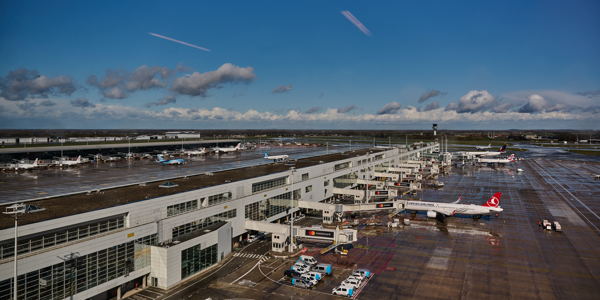
The public enquiry for the renewal of Brussels Airport's environmental permit has officially begun. The application file also includes an environmental impact assessment (EIA) prepared by independent experts. This EIA shows that the airport's noise impact will decrease in the coming years despite the predicted growth in passengers and cargo: by 2032, the number of potentially highly impacted people will decrease by 12% and it is expected that 63% of flights will then be operated with the most modern noise-efficient aircraft. Brussels Airport will also take additional measures: there will be a new engine test run site, additional noise barriers to reduce ground noise nuisance and research into possible measures for nitrogen deposition in specific nature areas. The EIA prepared by independent experts confirms that Brussels Airport can grow in terms of passengers and cargo in the coming years while reducing its noise impact on the environment.
A sustainable future for our country's second economic engine
The present environmental permit for Brussels Airport runs until 8 July 2024. A new permit is essential for the airport to continue its role as an economic engine. Proper connectivity with Europe's capital is indispensable for Belgium's export economy and for its many business and leisure travellers. With 64,000 jobs and €3.2 billion of added value per year, Brussels Airport is also the country's second largest economic engine. Brussels Airport always strives to strike a balance between its economic role and the impact of its activities on the environment.
The airport has already taken many measures in recent years to reduce its environmental impact. As a result, the number of potentially highly impacted residents has already decreased by 57% since 2000. Through highly differentiated rates, airlines are encouraged to use modern and quieter aircraft. Since April 2023, they have paid up to 20 times less for the quietest and most energy-efficient aircraft, with nitrogen emissions also factored in. Furthermore, Brussels Airport is committed to quieter landing techniques, single-engine taxiing and the electrification of ground handling equipment.
The renewal of Brussels Airport's permit is about continuing airport operations within the current infrastructure and rules. In its renewal application, the airport does not request any expansion of the runway infrastructure, for example, nor any additional night slots. However, in the interest of the Belgian economy, the airport does expect to be allowed to grow in passenger numbers and cargo volumes in line with the national and European economy.
After submitting the application for the new permit in July, and providing additional information in October, the public enquiry has now started. The application file also contains the environmental impact assessment (EIA) prepared by independent experts certified by the government.
Environmental impact assessment: reduced noise impact, modern fleet and mitigation measures
Besides calculating the current environmental impact (based on pre-COVID 2019), the EIA also examined a realistic future scenario within the existing infrastructure. This future scenario assumes an evolution to 32 million passengers and 1 million tonnes of flown cargo in 2032, in line with expected economic growth, with the number of aircraft movements remaining more or less stable compared to 2019 and still 26% lower than in 2000. This growth can be achieved within the current number of night slots, which was reduced by 36% to the current 16,000 in 2009.
In terms of noise the EIA shows that the number of potentially highly impacted people will decrease by 12% compared to 2019 despite the expected population growth around the airport. This is mainly due to further fleet renewal, with 63% of flights expected to be operated by the most modern and noise-efficient aircraft (vs. 31% today), and by using modern landing techniques that are quieter and emit less CO2.
In terms of air quality and emissions from airport activities, the expected growth has a slight impact on certain pollutants, but immissions will remain below the threshold of the applicable air quality standards. Brussels Airport and its partners are working to restrict these further. Among others, the advanced differentiation in airport charges with a nitrogen component since April 2023 and the electrification of ground handling equipment will have a positive effect on this. CO2 emissions will decrease by bringing the airport operator's own emissions (scope 1 & 2) to 0 by 2030, thanks to new fossil-free heating systems, among other things, but CO2 emissions from aircraft operations will also decrease through further fleet renewal and the use of biofuels.
The EIA shows that the airport contributes to nitrogen deposition in some nearby natural areas. This is not only due to airport operations, other sources such as road traffic also contribute. This especially applies to areas located along busy traffic axes such as the E19. The Government of Flanders' nitrogen agreement will now provide a framework; it is extremely good news for many businesses and industries that this is in place. It is now important for the announced nitrogen decree to come into force quickly. Nitrogen emissions from airport operations in Flanders remain within the limit for aviation provided for in the agreement and do not stand in the way of achieving Flemish nitrogen reduction targets.
A new engine test run site, additional noise barriers and a nitrogen plan
The EIA positively evaluated Brussels Airport's sustainability measures. These include differentiated airport charges, silent landings, aircraft stands equipped with power outlets allowing aircraft to turn off their auxiliary power unit, electrification of ground handling equipment, commitment to shift to alternative modes of transport to and from the airport and plans to bring airport operator emissions to zero by 2030. In the coming years, Brussels Airport will continue to focus on this, and take additional initiatives.
By 2026, 5% of aviation fuel at the airport should be sustainable aircraft fuels (SAF). Since January, these can be delivered smoothly through the NATO pipeline. SAF are an important tool in greening aviation and reducing CO2 emissions from air travel.
To further reduce the impact of ground noise, Brussels Airport will deploy a new engine test run site with noise barrier. Aircraft engines are tested at high power after being serviced. Engine test runs happen about 270 times a year on average. These tests are necessary to ensure the safety of the aircraft. Today, Brussels Airport already imposes that engine test runs can only be conducted between 7am and 10pm. Thanks to the new engine test run site with noise barrier, noise nuisance for local residents will decrease significantly. The engine test run site should be operational by 2027 at the latest.
Moreover, additional noise barriers will also be considered. There are already a number of noise barriers around the airport, and certain buildings also shield noise for people living nearby. The EIA now identifies two zones for additional noise barriers that could have a positive impact in terms of ground noise. Research for this will start in 2024 with a feasibility study.
In the EIA, experts recommend consulting with the owners and managers of Natura 2000 sites in the vicinity and investigating mitigation measures. For example, strengthening the forest edge in certain nature reserves can have a positive impact on nitrogen deposition, among other things. Brussels Airport will take this up with wildlife managers and see what role the airport can play in this.
With these plans, Brussels Airport reaffirms its ambition for a sustainable future for the airport, allowing it to continue to play its role as a vital economic engine for employment in Belgium while reducing its impact on the environment.